
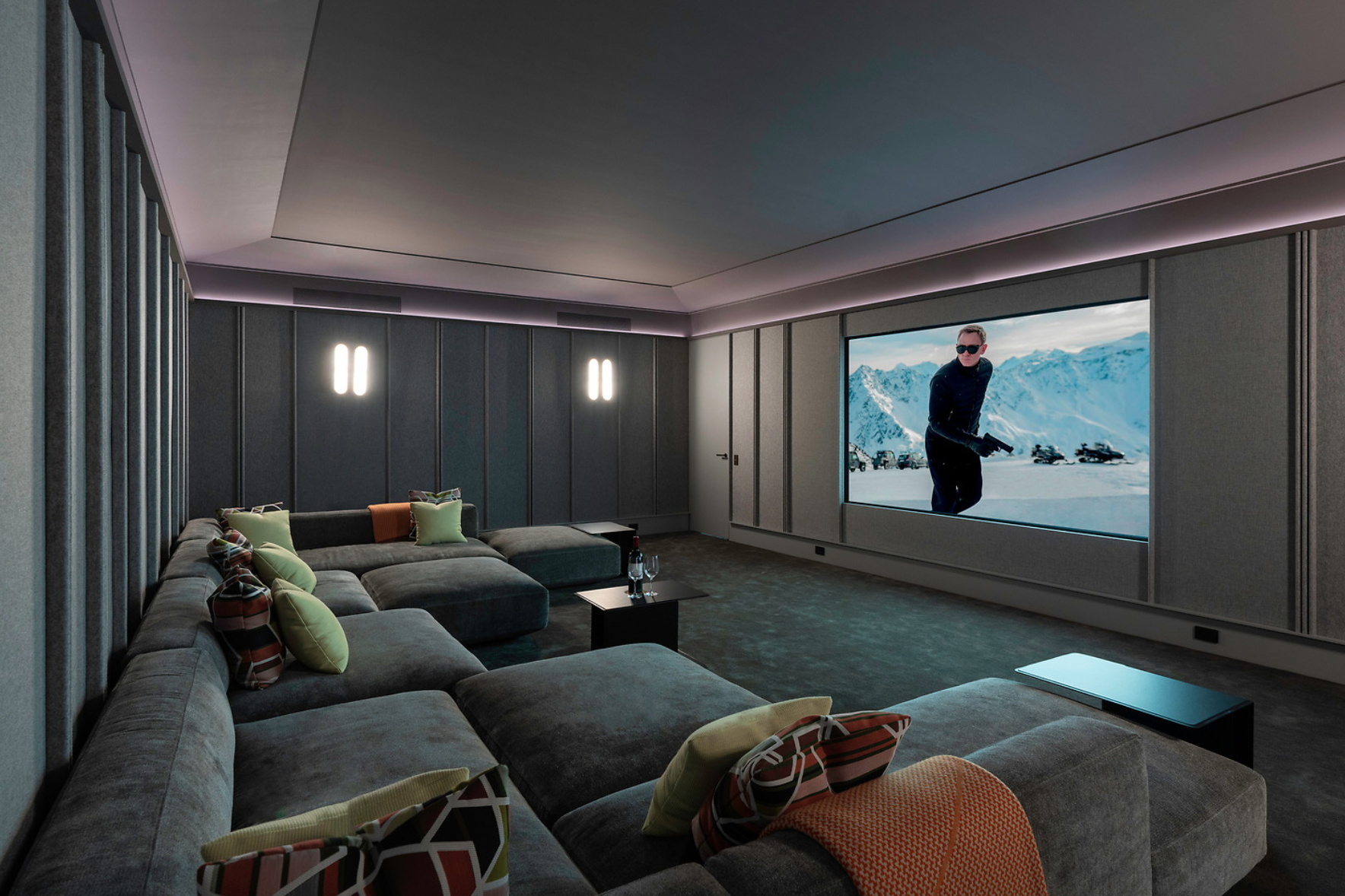
Home Theater & Media Rooms
OneButton designs and installs dedicated home theaters, media rooms and living-room cinema systems in New York and Los Angeles. Every system is engineered to the room — its acoustics, sightlines and seating — and controlled with one touch, so the experience is cinematic and the technology stays out of sight.
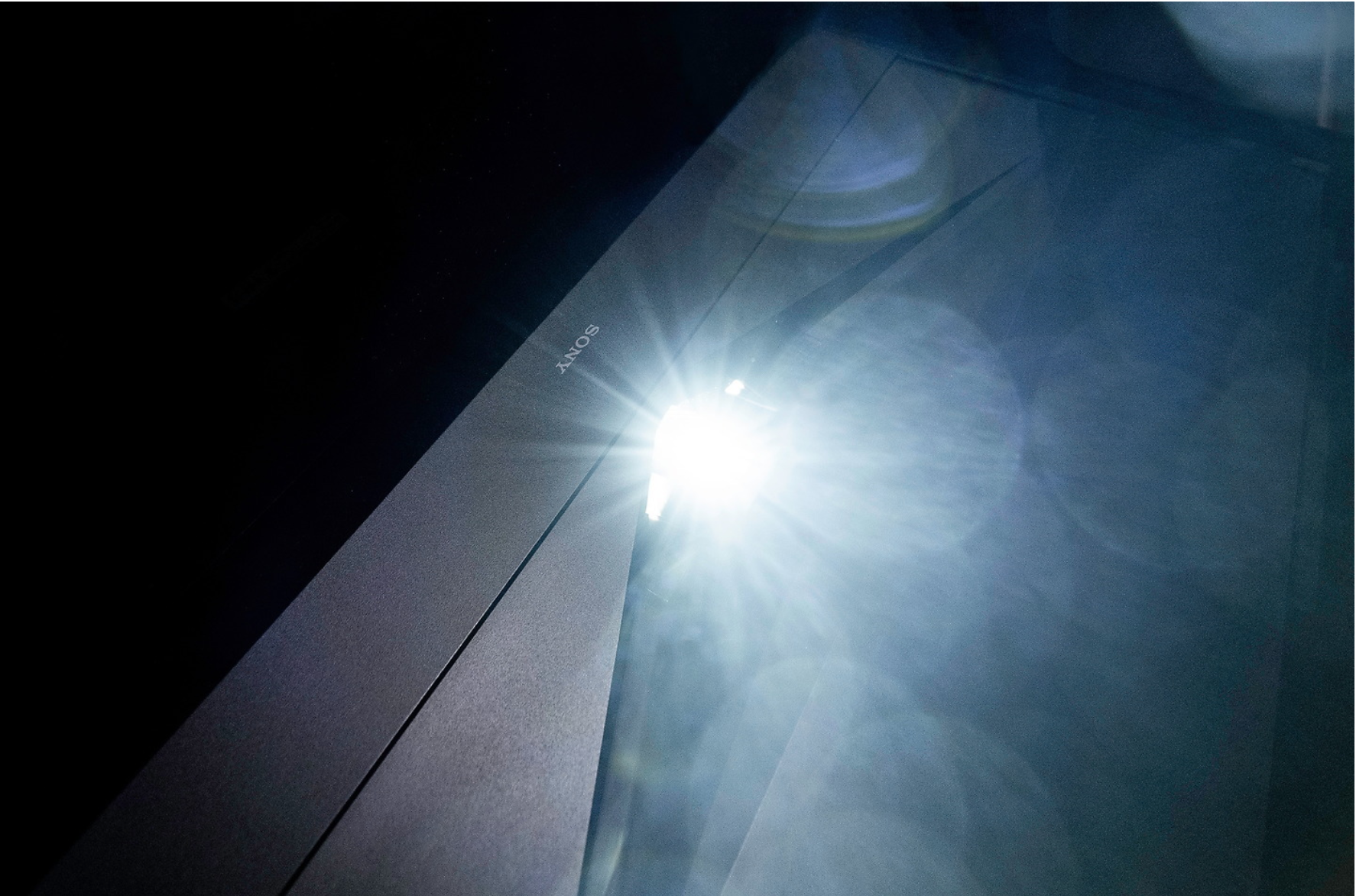
We are a Sony Diamond Dealer and HTA Certified, and our theater work has been recognized by Technology Designer and Lutron's Excellence Awards.
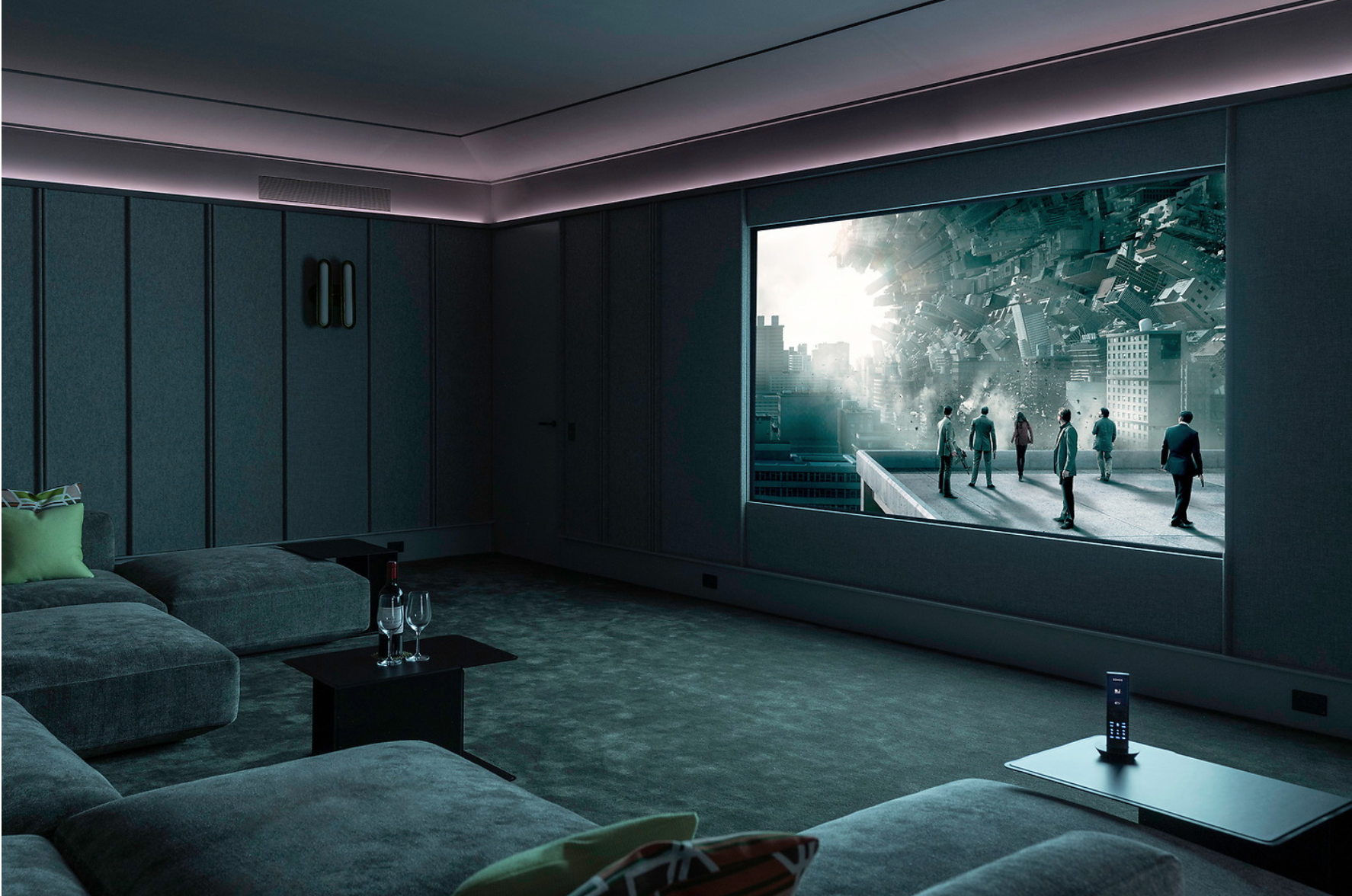
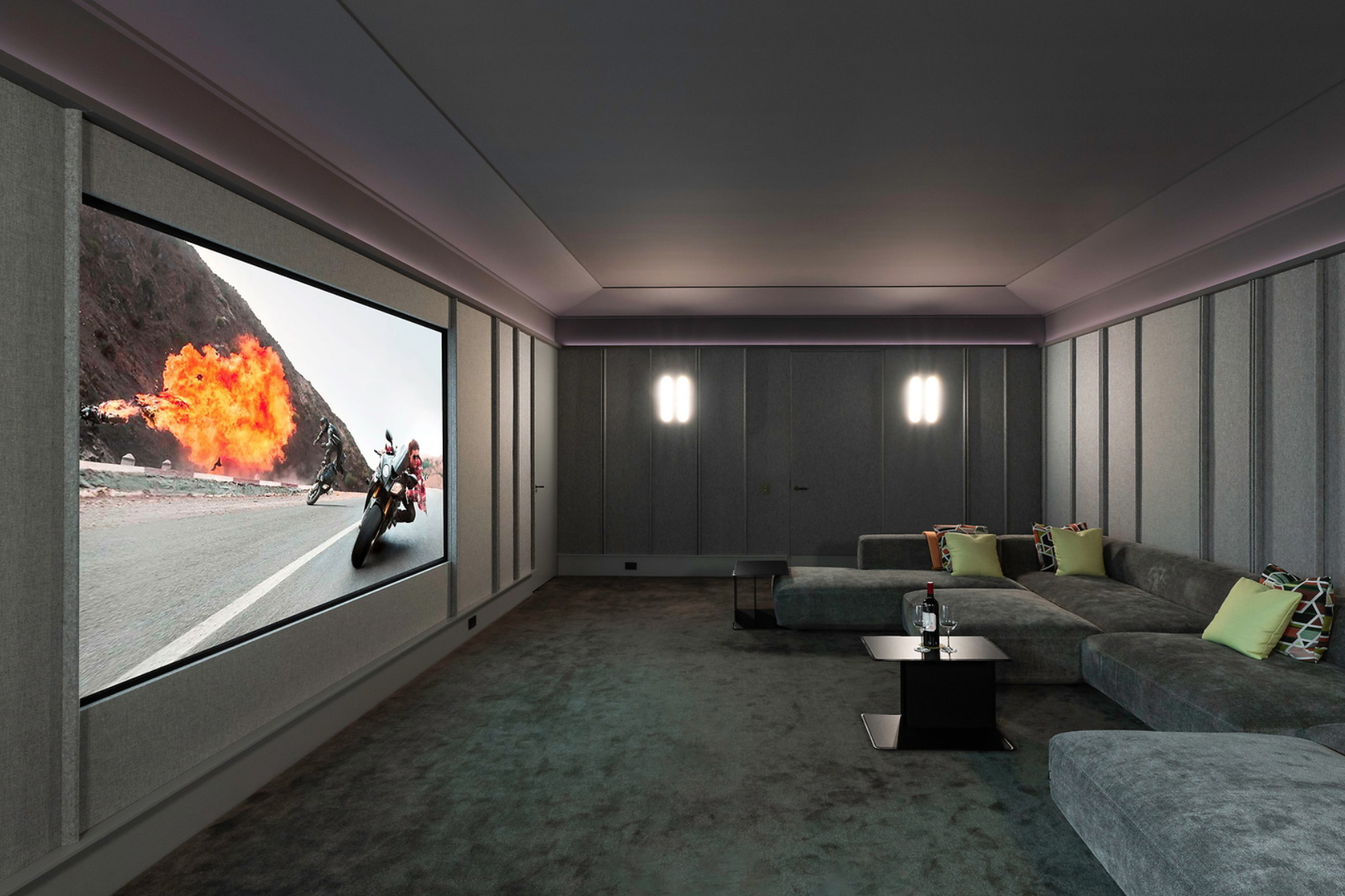
Dedicated theaters
A dedicated theater starts with the room: isolation and acoustic treatment, a screen sized to the seating distance, and speakers placed for the format — from 5.1 and 7.1 to immersive Dolby Atmos layouts. We specify 4K and 8K laser projection, acoustically transparent screens, and hidden in-wall and in-ceiling speakers behind fabric panels, paired with front-vented subwoofers. Lighting, shades and climate are part of the same scene: press Watch and the room is ready.
Media rooms and living rooms
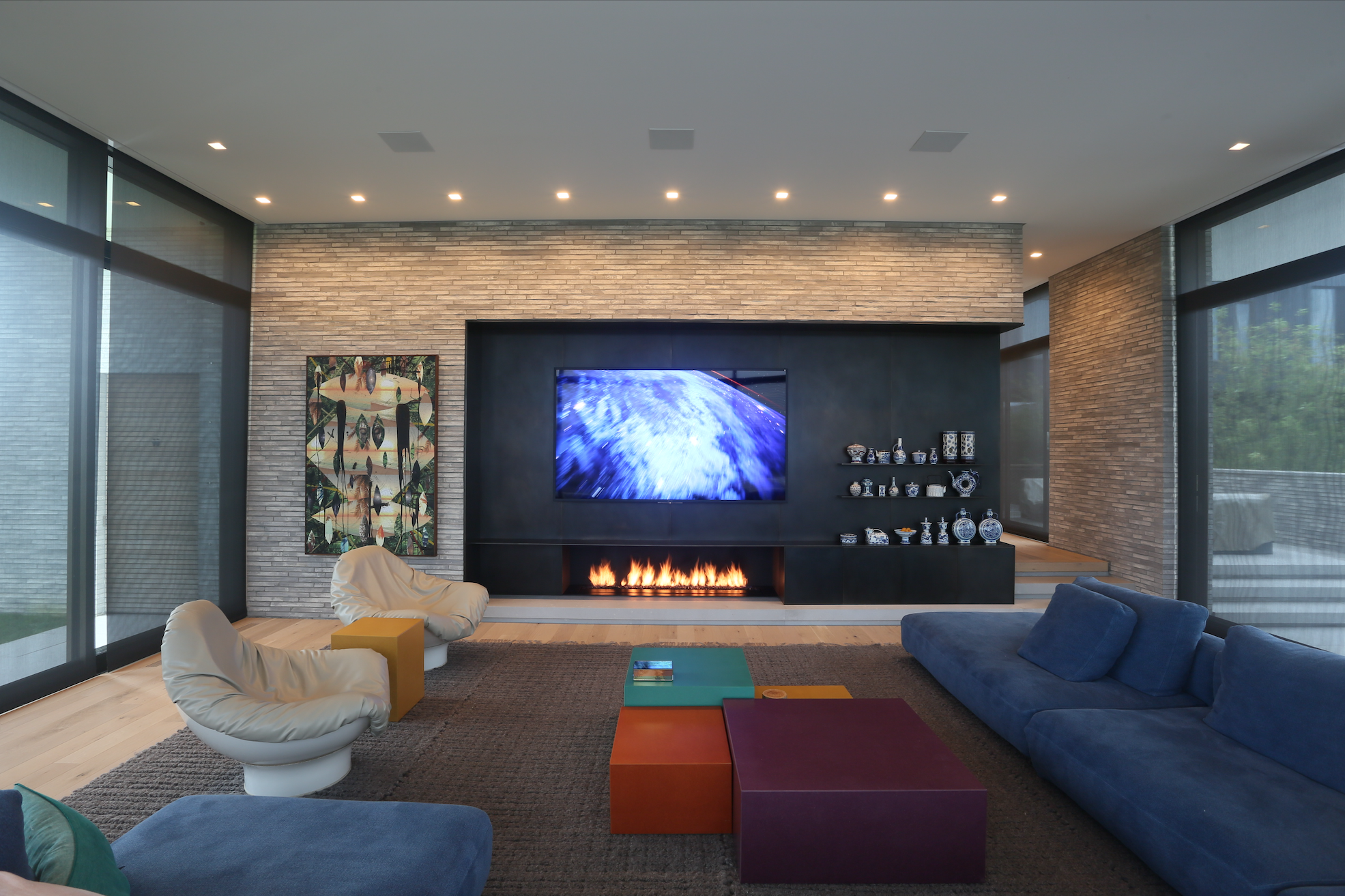
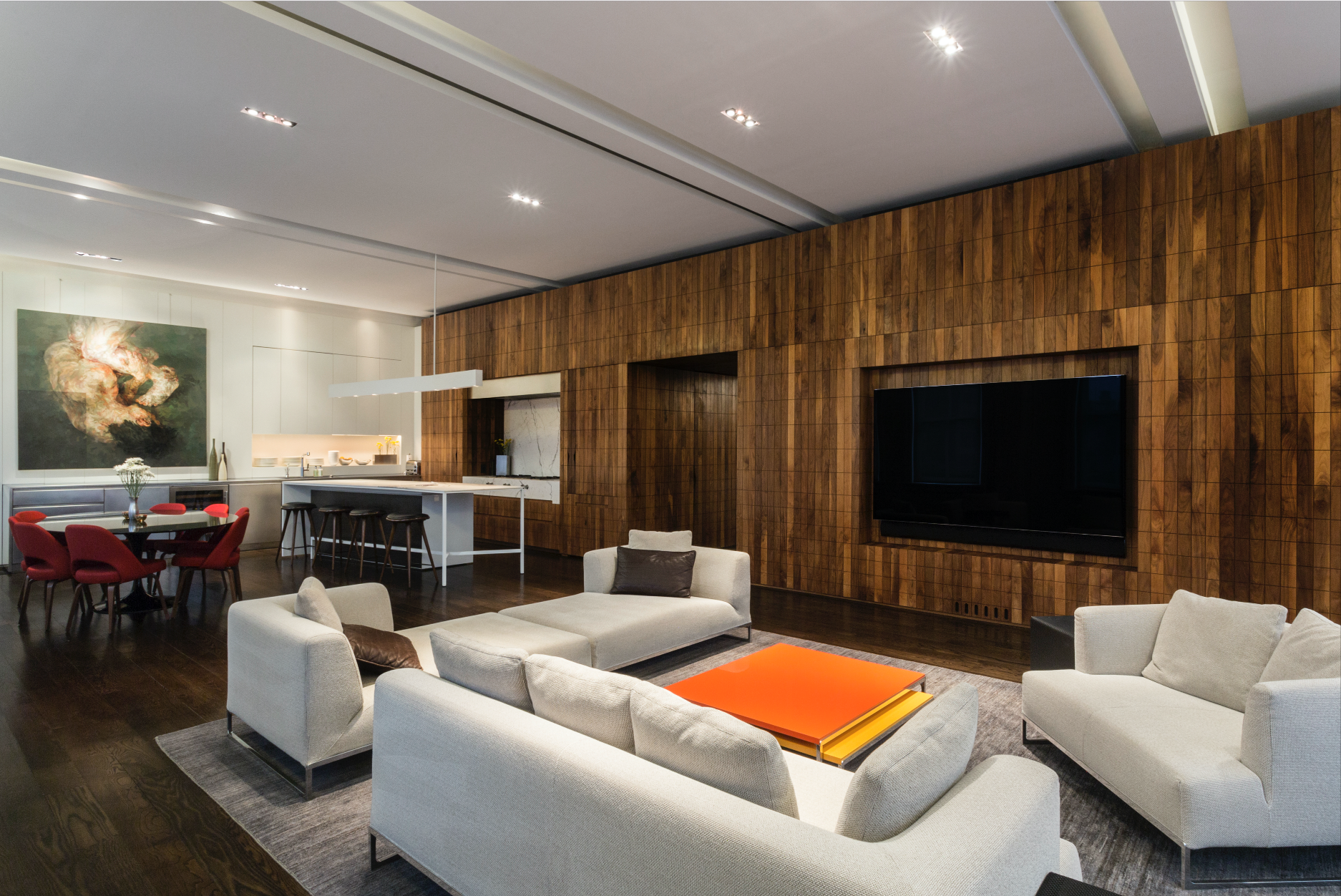
Not every space wants a dark room. Our media rooms put a large 4K display or a hidden projection screen into a living space, with surround sound built into millwork, bookshelves or ceilings. Options include recessed displays, ultra-thin OLED panels that mount flush to the wall, and screens that drop from the ceiling only when needed.
Hidden when not in use
- Projector lifts that lower from the ceiling and disappear afterwards.
- Projectors concealed in beams, soffits and millwork.
- TV lifts and picture lifts that reveal a display from cabinetry or behind art.
- Mirror TVs that become a mirror when switched off.
One button
A theater should be as easy as a light switch. Every OneButton system is programmed so one press turns on the right sources, sets the lights and shades, and adjusts the sound — and one press turns it all off. Streaming, cable, gaming and music are all reachable from the same remote or app.
How we work
We join during design so wiring, ventilation and equipment racks are planned before walls close. We coordinate with architects and interior designers on screen walls, acoustic finishes and seating, then calibrate picture and sound on site.
Planning a theater
The decisions that matter most are made early. Room size and shape set the screen size and the number of seating rows; the seating distance sets the right resolution and projector; and the acoustic design — isolation from the rest of the house, absorption and diffusion on the walls — determines whether the room sounds as good as it looks. Equipment needs a ventilated rack nearby, and the HVAC must be quiet enough not to intrude on dialogue. We work through these with your architect and interior designer so the finished room feels designed, not equipped.
We can also bring theater-quality sound and picture to rooms that do other jobs: a den with a drop-down screen, a family room with a large OLED and hidden surround speakers, or a bedroom with a TV that rises from the foot of the bed.
Questions
What is the difference between a home theater and a media room?
A dedicated home theater is a room designed only for watching — controlled light, acoustic treatment and projection. A media room is a multi-use space, such as a living room or den, with a large display or hidden screen and built-in surround sound.
Projector or TV?
Projection delivers the largest image and suits dedicated, light-controlled rooms. Large 4K and OLED displays work better in bright, multi-use rooms. We recommend based on the room, seating distance and how you watch.
Can the speakers be hidden?
Yes. Speakers can sit behind acoustically transparent screens and fabric panels, inside millwork, or plastered into ceilings and walls.
When should we involve OneButton?
As early as possible — ideally during design — so room dimensions, wiring, ventilation and equipment space are planned before construction.